SPAM
Client: BCD
Year: 2023
Research and Locations: Katia Llabata, Jara Varela
Text: Luis de Vicente
Graphic Design: Vera Tamayo
Print: Nova era
Photography: Jara Varela
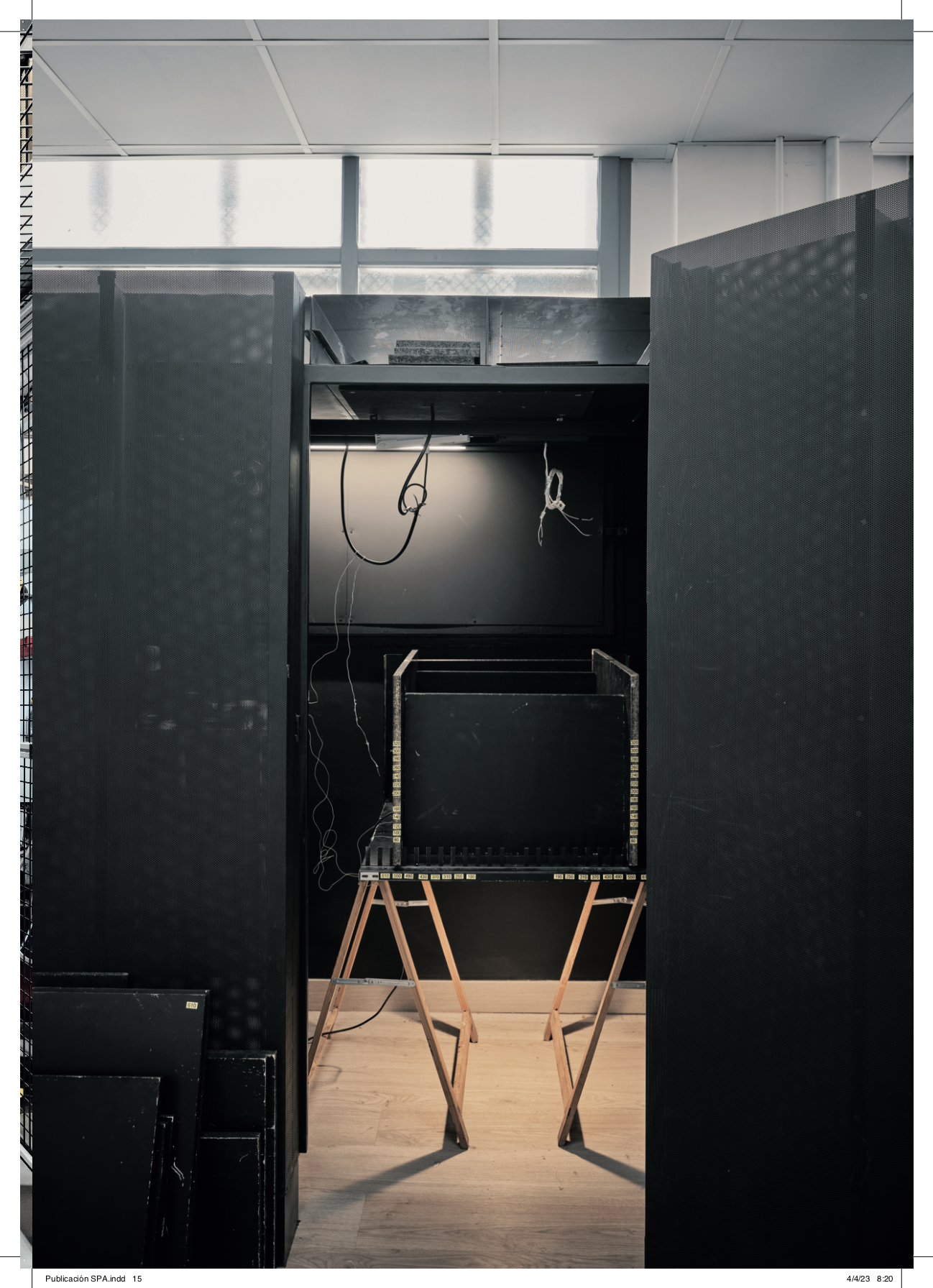
Churches and Spas are canonical examples of simulation architectures. They both operate as technologies to reprogram the senses. To fulfi ll their function, they need to exercise precise control over the temperature inside, the levels of light and darkness, the aromas and sounds that waft through the air.
The temple and the bathhouse are immersion environments in which we abandon ourselves to the amniotic logic, that space of protection in which the limits of our body and our consciousness can be erased and blurred. We all come from fl oating.
In a world in which images have lost their direct connection with reality, it is possible that touch, the least mediated of the senses, ends up being the only one that connects us with the tangible. If we can’t trust what we see because AI-generated simulations are already indistinguishable from the original, nor we can trust that the voices we hear still belong to the people they claim to belong to, is skin the last witness to the existence of an «outside» as real as each of us? Of course, the market, always efficient, is already satisfying this tactile desire and we are experiencing an explosion of epidermal forms of consumption, for all different social classes, and with increasing degrees of immersion. Manicures. Pedicures. Facials. UVA ray sunbeds. Infrared saunas. Steam Saunas. Mud Baths, Light Baths. Sand bathing. Sensory Deprivation Tanks. Flotation tanks. Hyperbaric Chambers. Cryogenic Chambers.
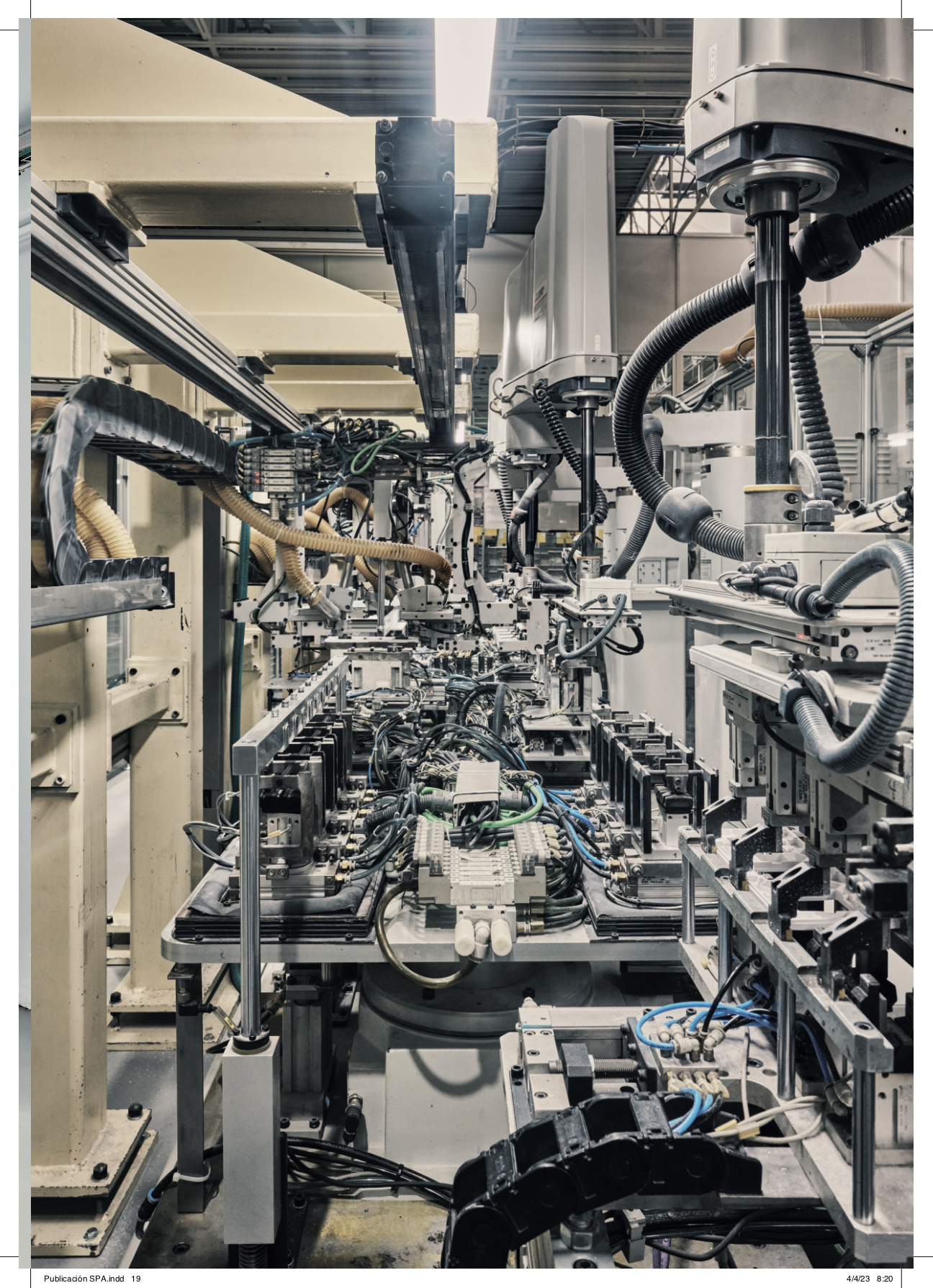
In video games, «skins» and «textures» are the surfaces that give a certain semblance of reality to what are nothing more than solid volumes, conglomerates of polygons one on top of another. The architecture of connected digital environments is more democratic and accessible the fewer polygons it uses, because these require the most valuable resources, data transmission and graphic processing capacity. In the metaverse, the only luxury is your bandwidth and the power of your graphics card.
The voxel, the minimum unit of digital volumetry, is not an aesthetic solution but an ethical choice. A low polygon architecture is a cheap, scalable and democratizing solution, like the false industrial stone that hides behind it a simple structure, light and honest.
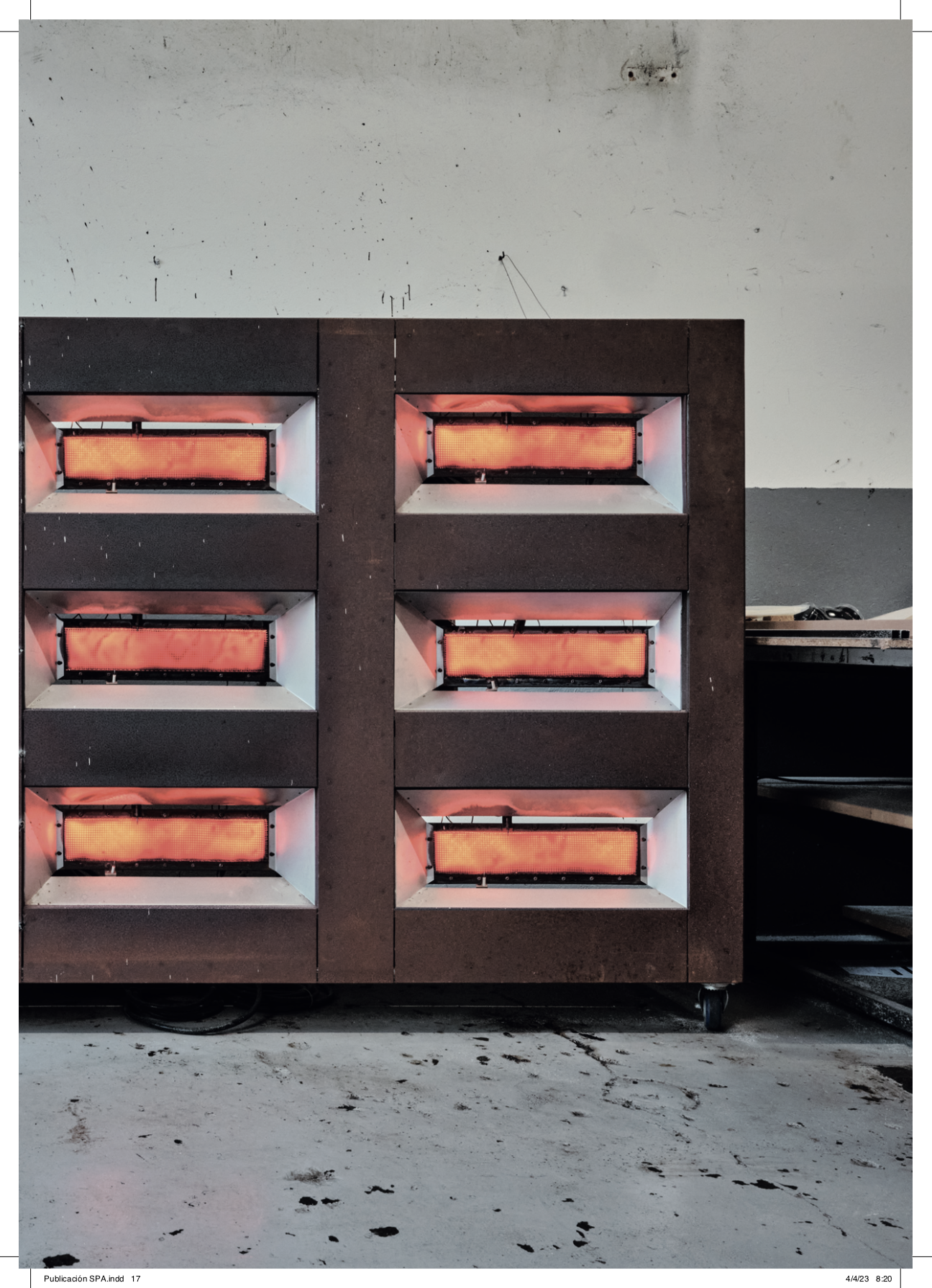
The main externality, the subsidiary effect of digital simulations and persistently connected universes, is heat. The heat emanating from a CPU, dissipated by fan in our desktop computer. The heat captured by the cooling systems of Data Centers. In Scandinavia, some Saunas operate using this surplus of energy, transforming voxels into sweat, skins into skin.